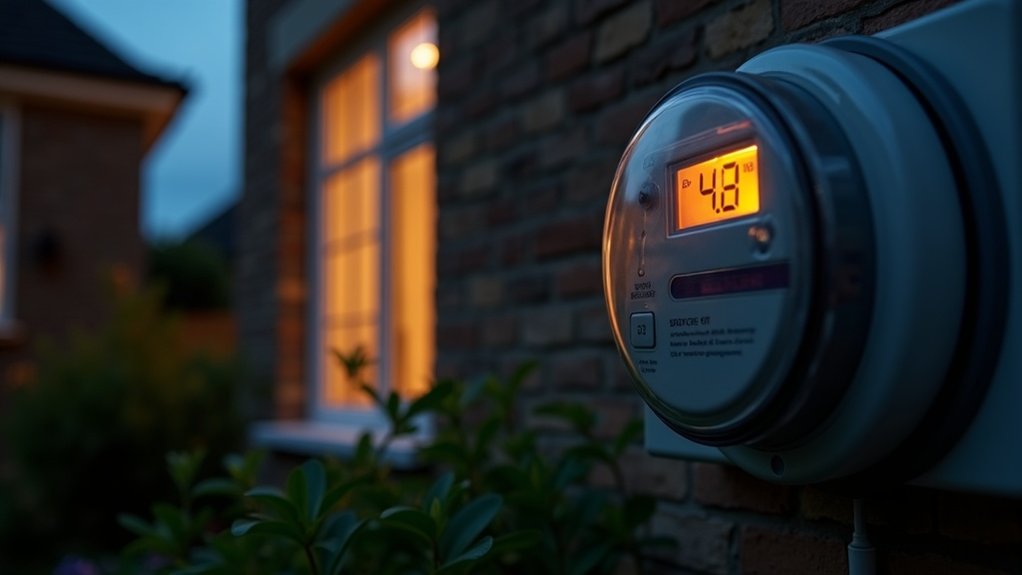
Consuming 40 kWh per day in the UK considerably exceeds the typical household average of 8 to 10 kWh, suggesting your energy use is unusually high. This may result from factors like a larger household, inefficient appliances, or extensive heating and cooling. Understanding your consumption in context helps identify areas for improvement. Exploring the influences on energy use and practical reduction methods can provide valuable insights to manage your electricity more effectively.
Understanding Average Household Energy Consumption in the UK
Although energy consumption varies widely across households, the average UK household typically uses around 8 to 10 kilowatt-hours (kWh) of electricity daily, depending on factors such as property size, number of occupants, and heating methods. When you consider this average, it establishes a baseline for understanding what constitutes normal usage in the UK. You should note that daily consumption often reflects typical activities like lighting, cooking, and operating appliances. While 8 to 10 kWh is common, some households may use less due to energy-efficient appliances or more by incorporating electric heating. By recognizing this average range, you can better evaluate how your own consumption compares to national norms, which aids in identifying whether your energy use is unusually high or low. Using a solar battery can help households store surplus energy and potentially reduce reliance on grid electricity, influencing daily consumption patterns.
Factors Influencing Daily Electricity Usage
Your daily electricity usage depends on a range of factors that can cause significant variation from the national average. Household size plays an essential role; more occupants typically increase consumption due to higher demand for lighting, heating, and appliance use. The types and efficiency of appliances you use also matter—older, less efficient models consume more energy. In addition, your lifestyle and daily routines, such as working from home or running multiple electronic devices simultaneously, impact usage levels. Seasonal changes affect heating and cooling needs, influencing electricity drawn for temperature regulation. Moreover, the size and insulation quality of your home determine how much energy is required to maintain comfort. Understanding these factors helps explain why your consumption might differ noticeably from typical UK household averages. An Energy Performance Certificate can help identify how efficiently your home uses energy and suggest ways to reduce consumption.
Practical Ways to Reduce Your Energy Consumption
Since reducing energy consumption directly impacts both environmental sustainability and household expenses, implementing practical strategies becomes essential. You can noticeably lower your daily electricity use by adopting a few targeted actions. Start by upgrading to energy-efficient appliances, which consume less power without compromising performance. Next, improve your home’s insulation to reduce heating and cooling demands. Additionally, using smart thermostats helps maintain ideal temperatures automatically, preventing unnecessary energy waste. Finally, switch to LED lighting, which uses a fraction of the energy compared to traditional bulbs. These steps not only decrease your 40 kWh daily usage but also contribute to long-term savings and reduced carbon footprint. Consider these practical methods:
- Upgrade to energy-efficient appliances
- Enhance home insulation
- Install smart thermostats
- Replace bulbs with LED lighting
Moreover, integrating solar panels can further reduce reliance on grid electricity and enhance your home’s energy efficiency.