Could the ECO4 scheme pay for my home energy improvements in 2025?
The ECO4 scheme provides free energy efficiency upgrades to UK homes with poor insulation and low-income households receiving government benefits. Energy suppliers fund improvements like cavity wall insulation, boiler replacements, and air source heat pumps for properties rated E, F, or G on Energy Performance Certificates, potentially saving families £500+ annually on heating bills.
The day British Gas knocked on my door with £8,000 worth of free improvements
I thought it was a scam when the British Gas engineer showed up at Margaret’s house next door with a clipboard and a smile. She’s 73, lives on her pension, and struggles with heating bills that hit £200+ monthly during winter.
“Mrs Thompson? I’m here about the ECO4 grant that’s been approved for your property,” he said, checking his paperwork. “We’re going to install cavity wall insulation, loft insulation, and replace your old boiler. No charge to you whatsoever.”
Margaret looked suspicious. “Nothing’s free, love. What’s the catch?”
“No catch,” he grinned. “Government scheme. Your energy supplier has to fund these improvements because your house has an E-rated Energy Performance Certificate and you’re on pension credit. Should cut your heating bills by about £60 a month.”
That’s when I realised the ECO4 scheme wasn’t some too-good-to-be-true offer. It’s a real government programme that forces energy companies to upgrade Britain’s coldest, draughtiest homes.
How does the ECO4 scheme actually work?
After watching Margaret’s transformation unfold, I spent ages researching how this system operates behind the scenes.
The ECO4 scheme places legal obligations on major energy suppliers to fund energy efficiency improvements in low-income households. Companies like British Gas, EDF Energy, E.ON, Ovo, and Scottish Power must collectively spend £4 billion between 2022-2026 upgrading roughly 3.5 million homes.
“Think of it like a social responsibility tax,” Margaret’s surveyor explained during my visit. “Energy companies have to meet carbon reduction targets. They do this by improving the worst-performing properties rather than just talking about net zero.”
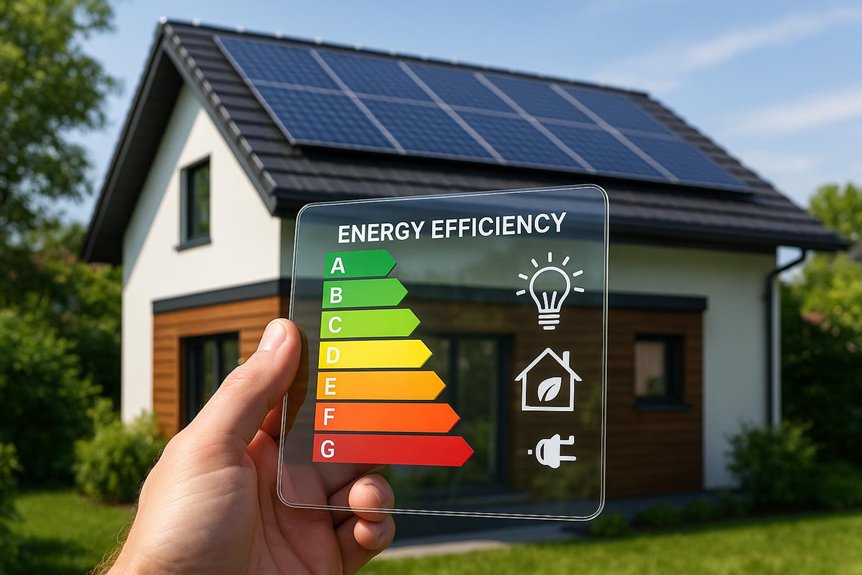
The scheme targets homes with Energy Performance Certificate ratings of E, F, or G – properties that lose heat through poor insulation and inefficient heating systems. These upgrades directly reduce carbon emissions whilst cutting fuel poverty.
Energy suppliers identify eligible properties through government benefit databases and EPC records. Once approved, they arrange free surveys and fund complete installations without homeowners paying anything upfront.
The system works because energy companies face financial penalties if they don’t meet their ECO4 obligations. This creates genuine incentive to find and upgrade qualifying properties efficiently.
Who actually qualifies for free ECO4 energy improvements?
Margaret qualified easily, but I wanted to understand the full eligibility picture before telling other neighbours about the scheme.
You automatically qualify if you receive:
- Pension Credit (guarantee or savings element)
- Universal Credit (with earnings threshold)
- Income Support or Jobseeker’s Allowance
- Employment and Support Allowance (income-related)
- Child Tax Credit (with income limits)
- Working Tax Credit (with income limits)
Your property must also have:
- Energy Performance Certificate rating of E, F, or G
- No recent energy efficiency improvements
- Homeowner occupation or private rental (social housing excluded)
Priority groups receive faster processing:
- Households with residents over 60 years old
- Families with children under 5 years old
- People with diagnosed health conditions affected by cold homes
- Residents with disabilities requiring constant heating
The ECO4 Flex element allows local councils to extend eligibility to low-income households not receiving benefits. This helps working families who earn just above benefit thresholds but still struggle with energy costs.
“I was worried about being a private tenant,” my friend Sandra explained. “But the scheme covers rental properties too, as long as the landlord gives permission and contributes towards costs.”
Margaret’s case was straightforward – pension credit recipient in an E-rated Victorian terrace. The approval came through within two weeks of the initial assessment.
What energy improvements does ECO4 actually cover?
Watching Margaret’s house get transformed over five days showed me exactly what £8,000 of ECO4 funding achieves.
Insulation improvements that ECO4 funds:
- Cavity wall insulation (blown into wall gaps)
- Solid wall insulation (internal or external)
- Loft insulation (upgraded to 270mm thickness)
- Floor insulation (suspended timber or solid floors)
- Room-in-roof insulation (converted attic spaces)
Heating system upgrades available:
- Boiler replacement with A-rated condensing models
- Air source heat pump installations
- First-time central heating for homes without gas systems
- Heating controls and smart thermostats
- Hot water cylinder replacement
Margaret received cavity wall insulation, upgraded loft insulation from 50mm to 270mm, and a new Worcester Bosch condensing boiler replacing her 15-year-old inefficient model.
“The difference is incredible,” she told me three months later. “My living room actually stays warm now, and my heating bills dropped from £180 monthly to about £110. The house feels completely different.”
The improvements ECO4 doesn’t cover:
- Double glazing or window replacement
- Solar panels or renewable energy generation
- Cosmetic improvements or decorating
- Garden landscaping or external works
The scheme focuses specifically on reducing heat loss and improving heating efficiency rather than general home improvements or renewable energy generation.
Which energy companies participate in ECO4 funding?
After Margaret’s success, several neighbours asked which suppliers offer ECO4 improvements. The answer surprised me.
Major obligated energy suppliers:
- British Gas (largest participant, handles most installations)
- EDF Energy (focuses on heat pump installations)
- E.ON (specialises in insulation upgrades)
- Ovo Energy (covers rural and remote properties)
- Scottish Power (strong presence in Scotland and Wales)
“You don’t have to be a customer of the energy company doing the work,” Margaret’s installer explained. “British Gas upgraded my house even though I buy electricity from Octopus Energy. The obligations are separate from customer supply.”
Smaller energy suppliers often partner with larger companies to meet their ECO4 requirements. This means virtually all UK energy customers contribute to funding through their bills, regardless of which company they choose.
Local authorities also participate through ECO4 Flex schemes, identifying additional eligible households and sometimes contributing funding for borderline cases.
Energy suppliers compete for ECO4 delivery contracts, which can mean better service and faster installation times as companies try to meet their annual targets efficiently.
How do you actually apply for ECO4 improvements?
Margaret’s process was smoother than expected, but I learned there are several routes into the system.
Direct application through energy suppliers: Most companies run online eligibility checkers on their websites. You enter property details, household income information, and current heating system details. Qualifying applications get flagged for survey appointments within 2-4 weeks.
Through local authority ECO4 Flex schemes: Councils identify eligible properties through council tax records, benefit databases, and housing condition surveys. They often proactively contact qualifying households rather than waiting for applications.
Via third-party installers: Approved contractors can identify eligible properties and submit applications on your behalf. This route works well for households uncomfortable dealing directly with energy companies.
Margaret’s journey started when she called British Gas’s ECO4 helpline after seeing a leaflet at her GP surgery. The process was remarkably straightforward:
- Initial eligibility check (phone call, 15 minutes)
- Property survey appointment (home visit, 90 minutes)
- Technical assessment and quote (report within 7 days)
- Installation scheduling (typically 2-4 weeks later)
- Completion and certification (work completed in 3-5 days)
“The surveyor was lovely,” Margaret remembered. “Very thorough, explained everything clearly, and didn’t try selling me anything extra. Just focused on what would make the biggest difference to my heating bills.”
What’s the realistic timeline for ECO4 installations?
Understanding timing helped me set proper expectations when discussing the scheme with other neighbours.
Margaret’s complete timeline from first contact to finished installation took eight weeks. This included a detailed survey, planning permissions for external wall work, and coordination with multiple trades.
Typical ECO4 project timeline:
- Week 1-2: Initial application and eligibility verification
- Week 3-4: Property survey and technical assessment
- Week 5-6: Planning and contractor scheduling
- Week 7-8: Installation work (typically 3-5 days)
Factors that can extend timelines:
- Planning permission requirements for external wall insulation
- Listed building or conservation area approvals
- Structural issues discovered during surveys
- Seasonal demand peaks (autumn/winter applications)
“The actual work was incredibly quick,” Margaret said. “Five days from start to finish, and they cleaned up beautifully afterwards. The disruption was minimal considering the amount of work involved.”
Installation teams typically work 8am-5pm to minimize noise disturbance. For elderly residents like Margaret, installers often schedule work in phases to reduce upheaval.
Quality control inspections happen both during and after installations. Margaret received follow-up visits at 1 month and 6 months to ensure everything was working properly.
Does ECO4 actually improve Energy Performance Certificate ratings?
This was a key question because better EPC ratings affect property values and rental requirements.
Margaret’s house jumped from an E rating to a B rating after ECO4 improvements. The new EPC certificate arrived six weeks after installation completion, showing dramatic improvements in energy efficiency scores.
Typical EPC rating improvements from ECO4:
- E rating to C rating: Standard outcome for cavity wall and loft insulation
- F rating to C rating: Common with boiler replacement and insulation
- G rating to B rating: Achievable with comprehensive upgrades including heat pumps
Better EPC ratings provide several ongoing benefits beyond lower heating bills:
Financial advantages:
- Reduced energy costs (£40-£80 monthly savings typical)
- Increased property value (roughly £3,000-£5,000)
- Lower insurance premiums (some insurers offer discounts)
Regulatory compliance:
- Private rental properties must achieve E rating minimum by 2025
- Future sales may require better energy efficiency standards
- Compliance with emerging local authority requirements
Margaret’s property value increased by an estimated £4,500 according to her estate agent. “The B rating makes it much more attractive to buyers,” he explained. “Energy efficiency is becoming a major selling point.”
Are there any hidden costs or catches with ECO4?
This was everyone’s main concern after hearing about Margaret’s “free” improvements.
The ECO4 scheme genuinely covers full costs for eligible households with no upfront payments, loan arrangements, or future repayment requirements. Margaret paid absolutely nothing for £8,000 worth of improvements.
Potential costs for some households:
- Private tenants: Landlord contribution (typically 10-20% of costs)
- Properties requiring structural work: Additional building repairs
- Listed buildings: Planning application fees (£100-£300)
What ECO4 doesn’t cover:
- Decorating after internal wall insulation
- Temporary heating during boiler replacement
- Upgrading electrical systems for new heat pumps
- Garden restoration after external wall insulation access
“The only ‘catch’ is that you have to qualify under quite strict criteria,” Margaret’s surveyor explained. “But if you meet the requirements, there really are no hidden costs or obligations.”
Energy companies cannot use ECO4 as a sales opportunity for additional services. Installers must focus solely on approved improvements without trying to sell extra products or ongoing maintenance contracts.
Warranties typically cover installations for 10-25 years depending on the improvement type. Ongoing maintenance remains the homeowner’s responsibility, but properly installed insulation requires virtually no upkeep.
What about properties that don’t quite qualify for ECO4?
After seeing Margaret’s results, several neighbours with slightly higher incomes asked about alternatives for properties that miss ECO4 eligibility.
Local authority discretionary schemes: Many councils offer additional funding through ECO4 Flex or separate energy efficiency programmes. Income thresholds are often more flexible, and some councils prioritise specific property types or geographical areas.
Energy company voluntary schemes: Suppliers sometimes offer discounted improvements for households just above ECO4 thresholds. British Gas’s HomeHealth programme, for example, provides reduced-cost insulation and heating upgrades.
Government grants and loans: The Green Homes Grant scheme ended in 2021, but some regional programmes still offer partial funding for energy efficiency improvements. Scotland’s Warmer Homes Scotland and Wales’s Nest schemes provide broader eligibility.
Commercial finance options: Energy efficiency loans typically offer 5-8% APR for insulation and heating improvements. Some installers provide financing packages that spread costs over 5-10 years.
My friend David missed ECO4 qualification by £200 annual income. His local council’s discretionary scheme covered 70% of cavity wall insulation costs, and he funded the remaining £800 himself.
“Still worth doing,” David said. “Even paying £800 for improvements that should have cost £3,000, my heating bills dropped enough to recover the cost within two years.”
ECO4 Eligibility Quick Check
You likely qualify if:
- You receive any government benefits listed above
- Your property EPC rating is E, F, or G
- You’re homeowner or private tenant with landlord agreement
- Your household includes someone over 60 or under 5
- Your annual energy bills exceed £800
Apply through:
- Energy supplier websites (eligibility checkers available)
- Local authority ECO4 Flex schemes
- Phone: 0300 302 0221 (national ECO4 helpline)
- Citizens Advice for application support
Expected improvements:
- Insulation upgrades: Cavity wall, loft, solid wall options
- Heating replacement: Efficient boilers, heat pumps, central heating
- Annual savings: £300-£800 typical household bill reductions
- Installation time: 3-5 days for most improvement packages
- Warranty coverage: 10-25 years depending on improvement type
The ECO4 scheme represents a genuine opportunity to transform cold, expensive-to-heat homes into warm, efficient properties at no cost to qualifying households. With energy bills continuing to rise and winter fuel costs becoming increasingly unaffordable for many families, ECO4 improvements provide both immediate relief and long-term protection from energy price volatility.
Margaret’s experience proves that government schemes can actually work when properly implemented. Her monthly heating bills dropped by £70, her house became genuinely comfortable for the first time in decades, and her property value increased significantly. For qualifying households, ECO4 offers a pathway to energy security that simply wasn’t available to previous generations.