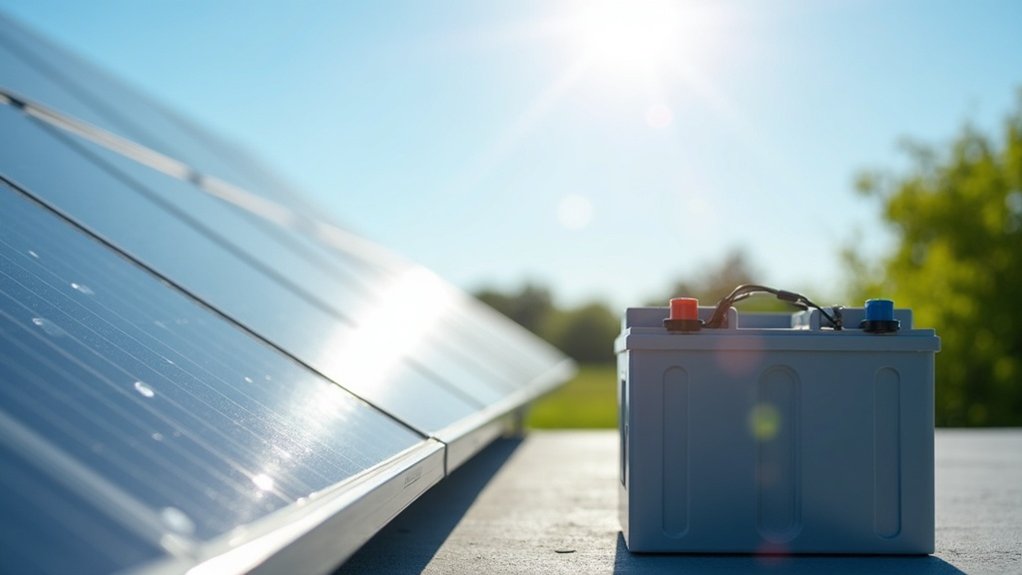
You don’t necessarily need a battery with solar panels, but adding one can help store excess electricity generated during the day, making it available at night or during outages, which increases your energy independence and financial savings. The decision depends on costs, battery capacity, and your energy consumption patterns; a typical 4 kWp system pairs well with an 8 kWh battery. Understanding how sizing, installation timing, and certified installers affect benefits helps you optimize your solar investment.
How Solar Batteries Work With Your Panels
Although solar panels generate electricity primarily during daylight hours, solar batteries play an essential role by storing the excess direct current (DC) electricity they produce, allowing you to use this energy when sunlight is unavailable. These batteries store DC electricity, which an inverter converts into alternating current (AC) for household use, and any surplus energy can be exported back to the grid. Battery capacity should ideally match your solar panel’s daily energy output; for example, a 4 kWp system produces around 8 kWh daily. Most batteries allow you to use 85%-95% of their capacity, but fully draining them risks damage, making proper sizing vital. By storing energy efficiently, solar batteries optimize consumption and contribute to overall system value, with notable annual savings linked directly to battery use. Lithium-ion batteries are currently the most popular choice in the UK due to their efficiency and durability.
Evaluating the Costs and Financial Benefits
When considering whether to invest in a solar battery system, it’s important to evaluate both the upfront costs and the potential financial benefits over time. A typical solar battery system costs around £5,000, including installation and inverter expenses, although prices can range from £1,500 to £10,000. To break even on a £5,000 investment, you’d need to save about £330 annually, yet average savings with effective use can reach £582 per year. Using stored energy is often cheaper than exporting electricity to the grid and buying it back, which improves cost efficiency. However, since batteries last between five and 15 years, recouping the initial cost depends heavily on electricity prices, battery cost, and your household’s consumption patterns, making careful financial analysis essential. Choosing a battery with a suitable capacity range between 5–15kWh can optimize savings and performance for typical household use.
Choosing the Right Battery Size and Installation Timing
Since selecting the right battery size directly impacts your system’s efficiency and longevity, you’ll need to carefully match the battery capacity with your solar panel output and daily energy consumption. For example, a 4 kWp solar panel system producing about 8 kWh daily usually pairs best with a battery that accommodates 85%-95% usable capacity to prevent damage from full drainage. Installing your battery simultaneously with the panels can reduce costs through package deals, making it a financially sound decision. Additionally, plan for future expansion by choosing battery systems that allow easy additions, ensuring compatibility and sufficient space. Consulting with certified installers helps determine the best battery size and installation timing tailored to your specific energy needs, maximizing performance and system lifespan. Considering a battery with lithium iron phosphate chemistry can offer enhanced safety and longer cycle life for your solar energy storage.
Selecting a Certified Installer and Ensuring Consumer Protection
Choosing the right battery size and installation timing sets the foundation for your solar power system’s efficiency, but selecting a certified installer plays an equally important role in protecting your investment. Confirm your installer holds certifications from reputable bodies like the Renewable Energy Consumer Code (RECC) or Home Insulation and Energy Systems (HIES), which offer consumer protection. Additionally, verify Microgeneration Certification Scheme (MCS) accreditation, as it guarantees quality and eligibility for government incentives such as the Smart Export Guarantee (SEG). To safeguard payments, use a credit card to benefit from Section 75 rights, or a debit card for chargeback protection. For warranty issues, your first contact should be the installer, but if they’re MCS certified, you can seek assistance directly through the scheme, guaranteeing thorough consumer safeguards throughout the process. Using MCS-certified installers ensures compliance with UK safety and performance standards, providing peace of mind and quality assurance for your installation.
Maximizing Savings and Future-Proofing Your Solar Setup
How can you maximize your savings and future-proof your solar setup effectively? Installing a solar battery alongside your panels can increase your annual savings by around £582, with about £130 coming from the battery itself. You can leverage cheaper off-peak electricity tariffs by charging the battery during low-cost periods and using stored energy during peak times, potentially saving hundreds more. It’s essential to properly size the battery, typically matching the daily energy output of a 4 kWp solar panel system, which produces about 8 kWh daily. Opting for a simultaneous installation often reduces costs through package deals. Monitoring your energy generation and storage helps optimize usage, ensuring you fully capitalize on your solar investment while preparing your system for future energy demands. Additionally, using lithium-ion batteries, the dominant technology in battery storage, ensures high efficiency and long cycle life for your solar setup.