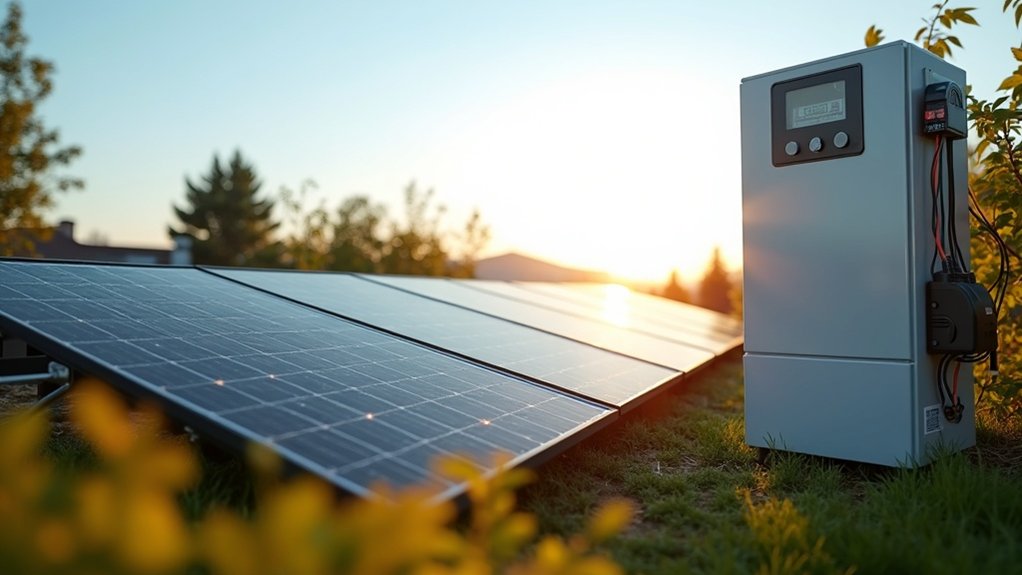
A hybrid solar system combines solar panels, battery storage, and grid connectivity to efficiently power your home. It captures sunlight, converts it to electricity for immediate use, stores excess energy in batteries, and taps the public grid when necessary. This setup offers reliable electricity during outages and reduces reliance on the grid, though initial costs are higher due to batteries and equipment. Understanding how it integrates generation, storage, and distribution will clarify its full benefits and limitations.
Understanding the Components of a Hybrid Solar System
Although hybrid solar systems integrate multiple technologies, their core functionality depends on four primary components that work in tandem to harness and manage solar energy efficiently. First, solar panels capture sunlight, typically installed on rooftops or exposed outdoor areas to optimize energy generation. The solar inverter then converts the direct current (DC) produced by these panels into alternating current (AC), which powers household appliances. A switchboard manages how electricity is distributed throughout your home, ensuring safe and effective energy flow. Finally, battery storage retains any excess energy generated during the day, allowing you to use it at night or during power outages. Proper installation, including secure mounts for panels and sufficient space for batteries, is essential for maintaining system efficiency and reliability. Many hybrid systems use lithium-ion batteries for their long lifespan and high energy density.
Comparing Hybrid Solar Systems With On-Grid and Off-Grid Options
Hybrid solar systems integrate key components like solar panels, inverters, switchboards, and battery storage to harness and manage solar energy efficiently, but understanding how they compare with traditional on-grid and off-grid setups can help you determine the best fit for your energy needs. Unlike on-grid systems, which depend entirely on the public grid and lack battery storage, hybrid systems store excess energy for use during outages or low production. Off-grid systems, while fully independent, require extensive batteries and costly equipment to maintain power continuously. Hybrid systems offer a middle ground, allowing you to generate and store solar energy while drawing from the grid when necessary. Although initially pricier due to battery inclusion, hybrids provide potential revenue by selling surplus energy back to the grid, a benefit absent in off-grid configurations. Additionally, hybrid systems can participate in the Smart Export Guarantee scheme, earning payments for surplus electricity exported to the grid.
The Operational Mechanism of Hybrid Solar Systems
When sunlight strikes the solar panels, they convert it into direct current (DC) electricity, which the system’s inverter then changes into alternating current (AC) suitable for household appliances. The system prioritizes immediate energy use, supplying your home directly. If production exceeds demand, the surplus electricity charges the batteries, storing power for nighttime or grid outages. Simultaneously, the hybrid system stays connected to the public grid, drawing supplemental energy when solar output is insufficient. This connection also lets you sell excess energy back to the grid, optimizing efficiency and cost savings. By integrating solar panels, inverters, batteries, and switchboards, the operational mechanism balances energy independence with grid reliability, ensuring continuous power and maximizing clean energy utilization in varying conditions. Battery storage technologies, especially lithium-ion batteries, play a crucial role in efficiently storing and managing this energy.
Essential Equipment for Installing a Hybrid Solar System
Before installing a hybrid solar system, you need to understand the essential equipment that enables its efficient operation. Four key components make up the system: solar panels, a solar inverter, a switchboard, and battery storage. Solar panels capture sunlight and convert it into direct current (DC) electricity. This DC power then passes through the solar inverter, which transforms it into alternating current (AC) for household use. The switchboard functions as a distribution center, directing electricity from both the solar panels and batteries to your home’s appliances. Battery storage plays a critical role by storing surplus energy for use during low sunlight or outages. Additionally, proper solar panel mounts and adequate space for batteries are necessary to guarantee peak performance and accommodate all components effectively. It is important to use MCS-certified installers to ensure the system complies with safety and efficiency standards.
Advantages and Drawbacks of Hybrid Solar Systems
Understanding the key components of a hybrid solar system sets the stage for evaluating its overall benefits and limitations. Hybrid systems allow you to harness solar energy and store excess power in batteries, providing electricity during outages or nighttime, which enhances reliability compared to traditional on-grid setups. They connect to the public grid, reducing reliance on it and potentially lowering energy costs. However, the upfront cost is higher due to batteries and additional components. You also need enough space for installation, which may not be feasible for everyone. The flexibility to use stored solar energy alongside grid electricity helps maximize usage during peak times and can offer financial incentives through net metering. Balancing these advantages against costs and space requirements is essential before deciding. Many popular home batteries, such as the Tesla Powerwall or LG Chem RESU, offer 10-year warranties that provide long-term assurance for system reliability.