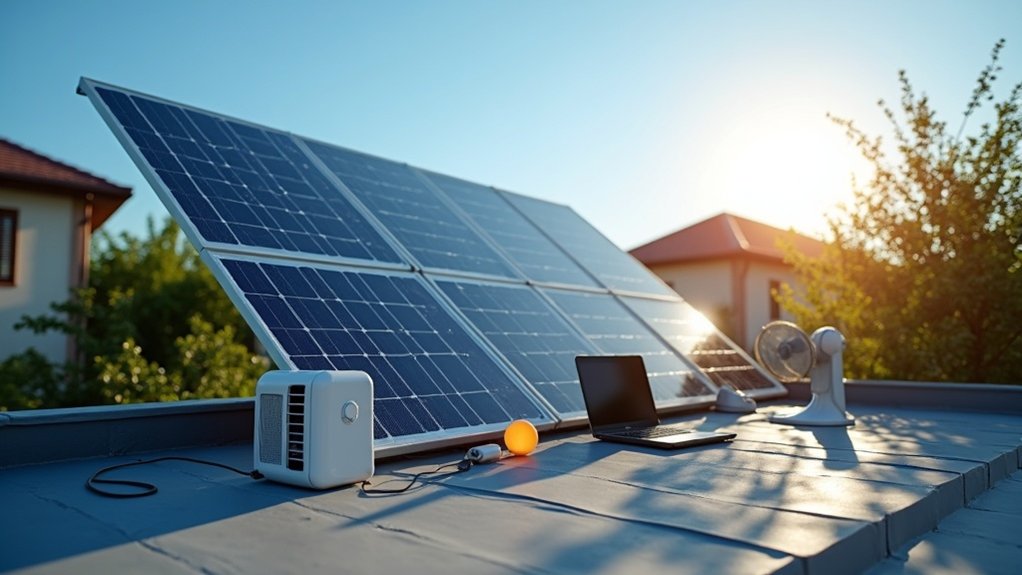
A 1000W solar panel can efficiently power low-wattage devices such as smartphones, laptops, LED lights, and small fans, supporting essential communications, lighting, and cooling needs. It handles multiple small appliances simultaneously but cannot sustain high-draw equipment like full-size refrigerators, microwaves, or electric stoves without risk of overload. For practical use, you’ll want to assess each device’s wattage carefully to maximize efficiency. Understanding these capabilities clarifies what applications fit best with this power level.
Common Devices Powered by a 1000W Solar Generator
A 1000W solar generator can power a range of common devices, particularly those with lower energy demands, making it a practical choice for off-grid living or emergency situations. You can efficiently charge smartphones, tablets, and laptops, which are essential for communication and work. Additionally, it supports small appliances like LED lights and fans, allowing you to maintain comfort without excessive energy use. The generator also powers critical medical devices such as CPAP machines, ensuring health needs are met during outages. For outdoor activities, it can run camping gear including portable speakers and mini-fridges, enhancing convenience. However, you should avoid using high-power devices like microwaves or full-size refrigerators, as their wattage requirements exceed the generator’s capacity and could cause overloads or failure.
Small Appliances Compatible With 1000W Solar Power
How efficiently can a 1000W solar generator handle small appliances? Quite effectively, since it can power multiple low-wattage devices simultaneously without straining the system. For example, LED lights consuming 10-15 watts each can run together, providing ample illumination. Portable fridges or coolers, requiring 40-100 watts, operate smoothly, making this setup ideal for outdoor use. You can also charge laptops and tablets, which typically draw 30-100 watts, supporting remote work or entertainment. Small fans, using 20-50 watts, offer cooling without excessive energy demands. Additionally, essential medical devices like CPAP machines, which need 30-60 watts, receive reliable power, ensuring safety during outages or travel. Overall, a 1000W solar generator accommodates a range of small appliances efficiently, balancing power supply with diverse practical needs. Using a solar battery with the system can further enhance energy storage and availability when sunlight is limited.
Limitations of a 1000W Solar Generator for High-Power Equipment
Although a 1000W solar generator handles small appliances efficiently, it faces significant limitations when powering high-wattage equipment. Full-size refrigerators, electric stoves, and microwaves require starting and continuous power well above 1000 watts, often exceeding 1500 watts, which a 1000W generator cannot sustain. While these generators may provide a brief surge above their rated capacity, this surge is insufficient for devices demanding prolonged high power. Appliances like portable air conditioners and washing machines also surpass the generator’s continuous output capacity, making their operation unfeasible. You should carefully monitor the combined wattage of all devices connected, as exceeding the 1000W limit risks overloading the system. Consequently, a 1000W solar generator is not suitable for running high-power equipment that requires sustained, significant energy input.
Ideal Scenarios for Using a 1000W Solar Generator
When selecting a 1000W solar generator, it’s important to align your expectations with its operational strengths rather than its limitations. This generator efficiently powers low-energy devices like smartphones, tablets, and laptops, making it suitable for outdoor activities and remote work. It also supports small appliances such as LED lights, fans, and mini-fridges, which are beneficial for camping or during power outages. In blackout situations, it can run essential medical devices, including CPAP machines and routers, guaranteeing critical equipment stays operational. Furthermore, the generator can handle multiple low-power devices simultaneously without exceeding capacity, offering versatile energy solutions. However, it’s not designed for high-demand appliances like full-size refrigerators or electric stoves, so evaluating your power requirements before use is necessary to guarantee peak performance.