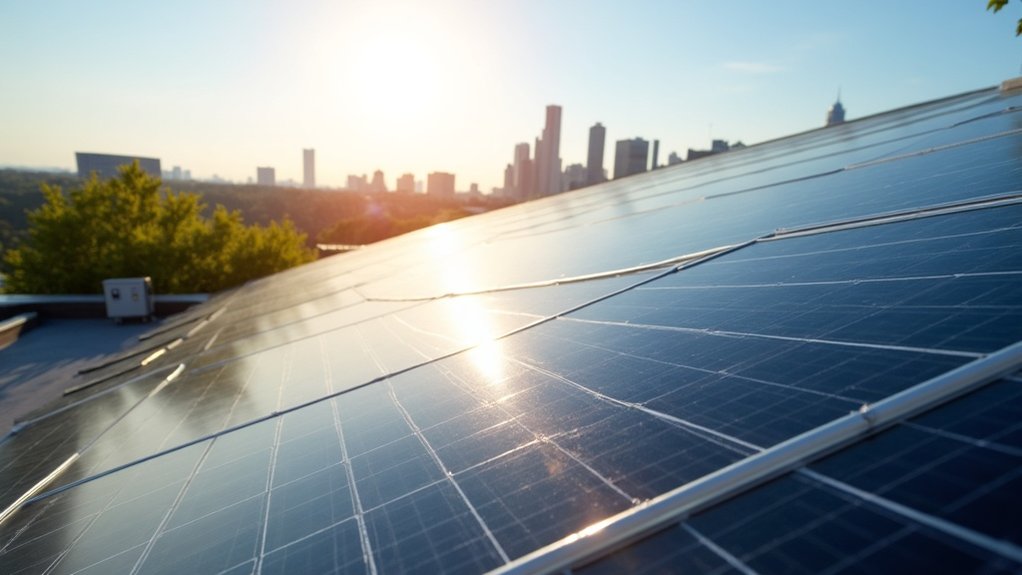
A 5.5 kW solar system typically generates between 22 and 27.5 kilowatt-hours of electricity daily, though this depends on factors like location, panel efficiency, and installation quality. Its annual output ranges from roughly 8,030 to 10,036 kilowatt-hours when positioned on an ideal south-facing roof with a 30 to 40-degree tilt. Proper orientation and minimal shading are essential for maximizing performance. Understanding these elements will clarify how such a system fits your energy needs.
Understanding the Capacity of a 5.5 Kw Solar System
A 5.5 kW solar system can generate up to 5.5 kilowatts of electricity under ideal conditions, which translates into a substantial energy production capacity. Typically, you can expect daily energy output ranging from 22 to 27.5 kilowatt-hours, depending on the average sunlight hours, usually between 4 and 5 hours. Over a year, this system could produce between 8,030 and 10,036 kilowatt-hours, making it suitable for both residential and commercial use. The system’s rated capacity reflects its maximum instantaneous power output, but actual production varies with environmental conditions. Understanding these capacity figures helps you evaluate whether this system meets your specific energy requirements and investment goals, providing a foundation for informed decisions about adopting solar technology. Proper installation on a south-facing roof with an ideal pitch of 30 to 40 degrees is crucial for maximizing the system’s efficiency and output.
Key Factors Affecting Solar Power Output
Several factors influence the power output of a 5.5 kW solar system, affecting how much electricity you can realistically expect to generate. The average daily sun-hours, typically between 4 and 5 in ideal locations, largely determine your daily energy production, ranging from about 22 to 27.5 kWh. Panel efficiency also matters; higher efficiency panels convert sunlight more effectively, increasing your overall output. Proper orientation and tilt, ideally facing true south, maximize sunlight absorption throughout the day. You need to take into account shading too, since shadows from trees or buildings can considerably reduce the sunlight reaching your panels, cutting output. Additionally, environmental factors like temperature influence performance, with cooler conditions generally improving efficiency compared to hot weather, which can decrease power generation. It is also important to consider solar panel installation costs when planning your system to ensure the investment aligns with your energy production goals.
Estimating Daily and Annual Energy Production
Estimating daily and annual energy production from a 5.5 kW solar system requires analyzing the average sun-hours available in your location, as this metric directly impacts how much electricity your system can generate. Typically, with 4 to 5 sun-hours daily, you can expect between 22 and 27.5 kWh of electricity production. Over a year, this translates to approximately 8,030 to 10,036 kWh, though actual output varies due to factors like panel efficiency, shading, orientation, and local climate conditions. To obtain a reliable estimate, consider these variables alongside sun-hours. A well-optimized system can substantially reduce your electricity costs by maximizing energy generation during its operational lifespan. Accurate estimations help in planning and evaluating the system’s financial and environmental benefits effectively. Incorporating a solar battery can further enhance the value of your solar system by storing excess energy for use during non-sunny periods.