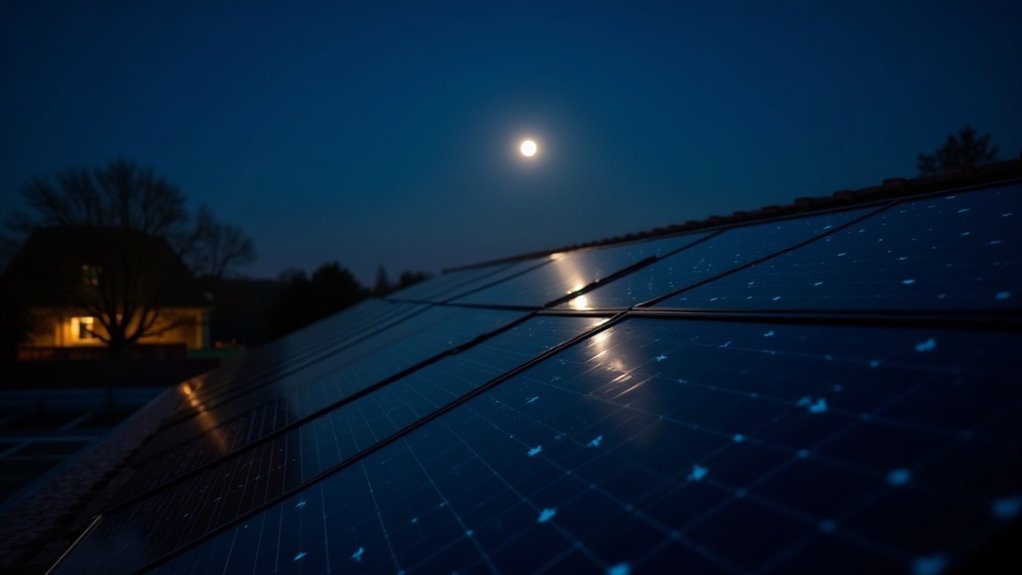
Solar panels don’t generate electricity at night without a battery because they rely on sunlight. However, you can still benefit by feeding surplus energy produced during the day back to the grid, earning credits through net metering or programs like the Smart Export Guarantee. These credits offset your nighttime power use, effectively using the grid as virtual storage. Operating without batteries cuts costs but depends on grid availability and policies. Understanding when battery storage is necessary can enhance your system’s value.
How Solar Panels Interact With the Grid After Sunset
Although solar panels cease producing electricity after sunset, they continue to interact with the electrical grid in a way that supports your energy needs. During daylight, any surplus energy your panels generate is sent to the grid, effectively crediting your account. When night falls and your panels stop producing power, you draw electricity from the grid to meet your home’s demand. This grid-tied system uses the utility infrastructure as a virtual storage solution, eliminating the immediate need for batteries. By relying on the grid, you maintain an uninterrupted energy supply, while the credits earned from daytime excess help offset costs incurred from nighttime consumption. This arrangement guarantees your solar investment remains efficient and functional, even when the sun is no longer shining. Additionally, schemes like the Smart Export Guarantee provide payments for the surplus electricity your panels export to the national grid.
The Role of Net Metering in Nighttime Energy Use
Net metering plays a significant role in how your solar energy system supports your home during nighttime hours when your panels aren’t producing electricity. It allows you to send excess energy generated during the day back to the grid, earning kilowatt-hour credits. These credits act as a form of energy storage, enabling you to draw on the energy you contributed once your panels stop producing power at night. By using net metering, you can effectively offset your electricity consumption without relying on battery storage. However, the benefits depend on your utility provider’s policies and compensation rates, which vary by location. Understanding these local rules is essential to maximizing your savings and ensuring your solar system meets your energy demands after sunset. Additionally, government initiatives like the Energy Company Obligation can complement solar installations by funding energy-saving improvements to reduce overall energy needs.
Benefits and Limitations of Operating Without Battery Storage
While solar panels don’t generate electricity at night, operating without battery storage allows you to simplify your system and reduce upfront costs by relying on the grid for power during those hours. This setup enables you to feed excess energy produced during the day back into the grid, earning credits through net metering that offset your nighttime electricity use. Without batteries, your solar system is less complex and avoids the significant expense associated with energy storage. However, this approach means you remain dependent on the grid when solar production ceases, offering no backup during outages. While cost-effective and straightforward, operating without battery storage limits your energy independence and resilience, making grid reliability a critical factor in your overall solar energy strategy. Nonetheless, many UK homeowners prefer lithium-ion batteries for their efficiency and durability when opting for battery storage solutions.
When Battery Storage Becomes Essential for Solar Users
When your area experiences frequent power outages or your utility provider offers low compensation for excess solar energy, battery storage becomes a critical component of your solar setup. It guarantees a reliable power source for essential devices during interruptions and makes financial sense when selling back energy yields minimal returns. Additionally, if your utility employs Time of Use rates, storing solar energy generated during the day lets you avoid high electricity costs during peak hours. Many homeowners also seek energy independence, opting for batteries to reduce grid reliance and maintain power availability. As electricity prices rise, battery storage grows increasingly attractive, often preferred over gas generators for emergency backup. Considering these factors, battery storage shifts from optional to essential, optimizing both your energy security and economic benefits. Modern home batteries typically offer 10-year warranties ensuring long-term reliability and peace of mind.