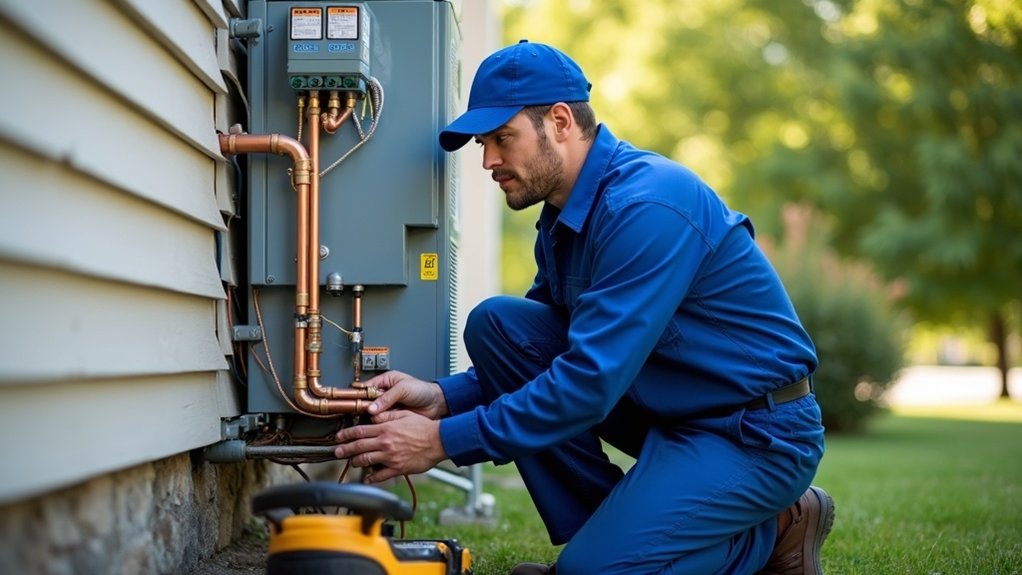
You shouldn’t rely on a normal electrician to install a heat pump, since it requires specialized knowledge of both electrical and plumbing systems, including dedicated circuits, isolator switches, and RCBOs to meet safety codes and manufacturer guidelines. Improper installation risks serious hazards, warranty voidance, and poor system performance. Only qualified professionals with HVAC training can guarantee compliance and protect your investment. Understanding these complexities helps you make a safer, code-compliant choice for your heat pump setup.
Understanding the Specialized Requirements of Heat Pump Installation
Although a normal electrician possesses essential electrical skills, installing a heat pump requires specialized knowledge that extends beyond standard electrical work. You’ll need to understand both electrical and plumbing systems since heat pumps demand dedicated circuits with isolator switches and specific components like RCBOs, which might exceed general licensing. You must also comply with manufacturer specifications to avoid voiding warranties and compromising efficiency. Additionally, installation involves adhering to plumbing codes, including tempering valves and proper condensation management, which aren’t typically within a standard electrician’s expertise. Handling refrigerants and ensuring correct airflow clearances requires HVAC training beyond basic electrical skills. Consequently, you must recognize that heat pump installation involves a combination of skills and regulatory compliance that standard electrical training may not cover adequately.
Risks of Using Unqualified Electricians for Heat Pump Setup
When you rely on unqualified electricians for heat pump installation, you greatly increase the likelihood of non-compliance with electrical codes, which can create serious fire hazards and lead to system malfunctions. Many heat pumps require dedicated circuits equipped with isolator switches and RCBOs; unqualified electricians may overlook or improperly install these critical components. Incorrect wiring not only jeopardizes safety but also compromises system performance, causing higher energy costs and shortening the heat pump’s lifespan. Additionally, faulty electrical connections can void manufacturer warranties, leaving you responsible for expensive repairs or replacements. Because restricted electrical licenses limit the authorized scope of work, verifying your electrician’s qualifications is vital to guarantee legal and safe installation practices, protecting both your property and investment.
Ensuring Compliance With Electrical and Manufacturer Standards
Since heat pumps demand specific electrical conditions, ensuring compliance with both electrical codes and manufacturer standards is critical for safe and efficient operation. You must verify that the installation uses dedicated circuits equipped with isolator switches and Residual Current Circuit Breakers (RCBOs), as these components protect against electrical faults and comply with safety regulations. Avoid connecting heat pumps to regular power sockets, since improper wiring risks malfunctions or hazards. Additionally, reviewing manufacturer specifications is essential to maintain warranty coverage and peak performance. Because heat pump installation involves both electrical and plumbing expertise, relying solely on a normal electrician without specialized qualifications increases the chance of non-compliance and safety issues. As a result, you should engage professionals trained to meet all technical and regulatory requirements for a secure, code-compliant setup.