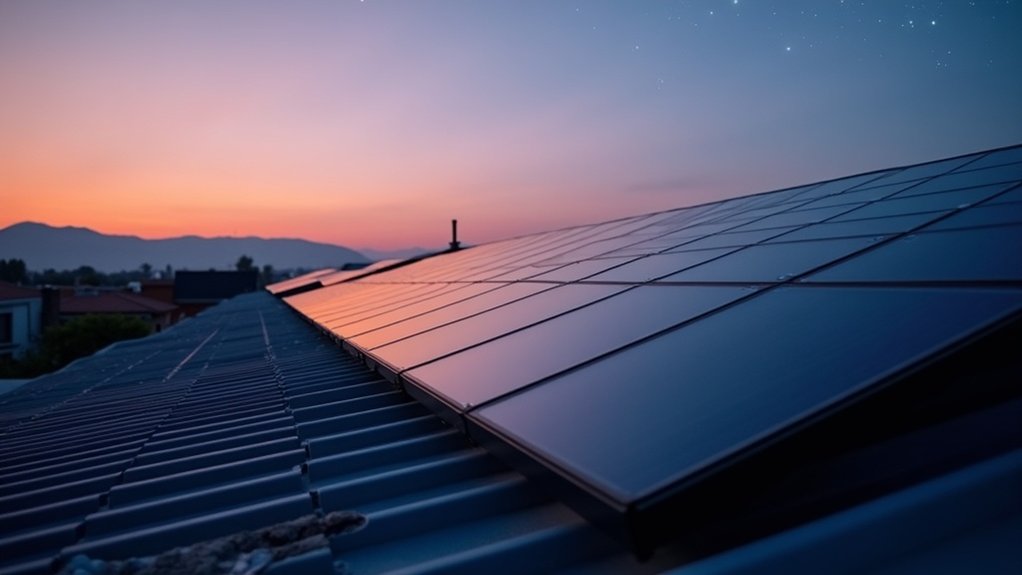
Solar panels don’t make any electricity when it’s dark, but battery storage systems do. Smaller systems can store power for 4 to 12 hours, while larger battery banks can store power for 2 to 3 days. On cloudy days in the UK, panels still produce 10–25% of their peak output, and at night, they have to rely on stored energy.
What I learned about solar power during Yorkshire’s long winter nights
Living with solar panels in Yorkshire has taught me some harsh realities about solar panel limitations during sunless periods that sales presentations rarely emphasise. After three years of tracking my system’s performance, I understand exactly how battery storage determines power availability when solar panels generate no electricity during our famously long British nights.
Here’s what experience taught me: Solar panels produce zero power after sunset, making battery storage absolutely essential for evening electricity use. Cloudy days reduce output dramatically to just 10-25% of peak generation, whilst winter months challenge system reliability for households expecting consistent solar power throughout the year.
How solar panels actually perform during different UK weather conditions
Let me break down the reality of solar generation without sunshine, because understanding these limitations helps you plan realistic energy expectations:
Bright sunny days generate 100% rated power when panels operate under ideal conditions with direct sunlight. Cloudy conditions reduce output to 10-25% of maximum capacity, depending on cloud thickness and atmospheric conditions. Overcast days typically produce 15% output – enough for minimal appliances but insufficient for normal household consumption.
Nighttime generation remains zero regardless of battery storage, moon phases, or artificial lighting. Solar panels require photons from sunlight to generate electrical current through photovoltaic conversion, making darkness completely unproductive for electricity generation.
Dawn and dusk periods extend generation slightly but at significantly reduced capacity compared to midday peaks, particularly during short winter days when useful daylight lasts only 7-8 hours.
What battery storage actually means for your solar system’s reliability
Battery storage transforms intermittent solar generation into reliable household electricity supply during sunless periods and nighttime consumption. Smaller battery systems provide 4-12 hours of stored power for essential appliances during evening peak usage.
Larger battery installations supply 2-3 days of household electricity during extended cloudy periods or winter storms when solar generation remains minimal for consecutive days. Battery capacity determines autonomy – larger systems cost more but provide greater energy security during challenging weather conditions.
My 10kWh battery typically powers essential loads for 8-10 hours during winter evenings when heating demands peak and solar generation ceased hours earlier. Summer storage lasts 12-15 hours due to reduced heating requirements and longer charging periods from extended daylight.
How UK weather patterns affect solar battery performance
British weather creates unique challenges for solar reliability that battery sizing must accommodate. Winter cloud cover can reduce generation for weeks consecutively, depleting battery storage faster than summer conditions allow for recovery.
Storm periods bring days of minimal solar output when battery systems must supply complete household electricity without meaningful recharging from severely limited generation. Spring and autumn weather alternates between productive and challenging periods that test battery management systems.
Seasonal variations mean battery performance requirements change dramatically throughout the year. Winter months demand larger storage capacity to maintain household comfort during extended low-generation periods, whilst summer surplus recharges batteries easily for overnight consumption.
Real-world battery performance during sunless periods
I track my system religiously and can share actual performance during challenging conditions. December storms lasting three days depleted my 10kWh battery completely by day two when solar generation remained below 5% for 72 consecutive hours.
January fog periods lasting 4-5 days gradually drain storage faster than minimal daytime generation can replenish battery capacity. February snow cover blocks panels entirely for days, making battery storage the sole electricity source until manual cleaning restores generation.
Autumn cloud cover reduces daily generation by 60-80% compared to summer peaks, shortening battery autonomy from 15 hours to 6 hours during identical consumption patterns.
Grid-tied versus off-grid solar during sunless periods
Grid-tied systems maintain electricity supply during sunless periods through automatic grid connection when battery storage depletes. Hybrid inverters seamlessly switch between solar generation, battery power, and grid electricity without household interruption.
Off-grid systems rely entirely on battery storage during sunless periods, making larger battery capacity essential for energy security during extended low-generation periods. Backup generators provide emergency power when battery storage depletes completely during challenging weather.
Grid connection provides ultimate backup for UK households during winter months when solar generation remains insufficient for weeks consecutively. Battery storage reduces grid dependency but cannot eliminate winter reliance on external electricity supply.
Strategies for maximizing solar power during limited sunlight
Oversized battery storage extends autonomy during sunless periods but increases system costs significantly. Energy-efficient appliances reduce consumption during battery-powered periods, extending available storage for essential household loads.
Load management systems prioritize essential appliances during battery operation, automatically reducing non-critical consumption to preserve storage for heating, lighting, and refrigeration. Smart inverters optimize battery discharge rates to maximize autonomy during challenging conditions.
Consumption timing becomes crucial during limited generation periods. Running washing machines, dishwashers, and heating systems during available daylight preserves battery storage for evening requirements when generation ceases entirely.
Planning battery storage for UK solar installations
Battery capacity should accommodate 2-3 days of essential consumption during worst-case weather scenarios that UK households regularly experience during winter months. Undersized systems create reliability issues during challenging periods.
Lithium battery technology provides optimal performance for UK climate conditions through high energy density and reliable operation during temperature variations. Battery warranties typically guarantee 10-15 years of reliable service with minimal capacity degradation.
Installation costs for adequate battery storage often exceed solar panel costs but provide essential energy security during sunless periods. Government incentives occasionally support battery installation alongside solar panel schemes.
Why understanding solar limitations improves system design
Realistic expectations about solar performance during sunless periods prevent disappointment and guide appropriate battery sizing for UK weather conditions. Overselling solar capabilities creates unrealistic expectations about energy independence during challenging weather.
System design should account for worst-case scenarios rather than optimistic projections that ignore UK weather realities. Battery storage costs significantly more than basic solar installations but provides essential reliability for households seeking genuine energy independence.
Grid connection remains valuable even with substantial battery storage during extended periods of poor generation that UK weather regularly produces throughout winter months.
Making informed decisions about solar battery storage
Solar panels without battery storage provide daytime electricity but require grid connection for evening consumption and sunless periods. Battery addition transforms intermittent generation into reliable household power but requires substantial additional investment.
Energy independence levels depend directly on battery capacity and consumption management during challenging weather periods. Complete independence requires oversized systems that many households find economically impractical.
Solar battery systems reduce grid dependency significantly whilst maintaining backup connection for worst-case scenarios that UK weather produces regularly during winter months.
Essential Battery Planning Considerations:
✅ Size battery storage for 2-3 days of essential consumption
✅ Account for reduced winter generation in capacity calculations
✅ Include load management systems for extended autonomy
✅ Plan consumption timing to maximize battery efficiency
✅ Maintain grid connection as ultimate backup system
✅ Budget for battery replacement every 10-15 years
Solar panels require battery storage to provide reliable electricity during UK sunless periods. Understanding these limitations guides realistic expectations and appropriate system sizing for households seeking energy security during challenging British weather conditions.
From daylight generation to nighttime autonomy – battery storage determines solar system reliability when UK weather challenges renewable energy performance throughout long winter months and unpredictable seasonal weather patterns.