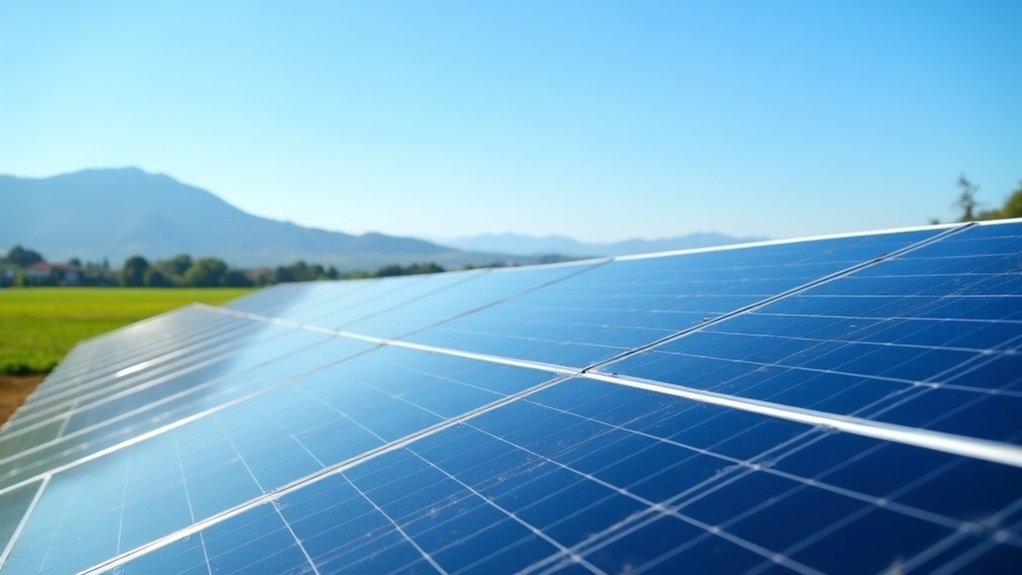
You can expect solar panels to last generally between 25 to 30 years, with monocrystalline models often exceeding 30, sometimes reaching 40 years under ideal conditions. Polycrystalline panels typically offer similar longevity but rarely surpass 35 years, while thin-film panels usually last only 10 to 20 years. Factors like material quality, installation precision, and environmental exposure heavily influence lifespan. Monitoring panel efficiency and addressing damages promptly help maintain performance. Understanding these aspects reveals how to optimize your solar investment’s durability.
Typical Lifespan Ranges for Different Types of Solar Panels
Although the lifespan of solar panels varies by type, understanding these differences is essential for making informed decisions about solar investments. Monocrystalline panels typically last between 25 and 30 years, sometimes reaching up to 40 years due to their high efficiency and quality materials. Polycrystalline panels share a similar range of 25 to 30 years but usually do not exceed 35 years. In contrast, thin-film panels have a notably shorter lifespan, generally lasting only 10 to 20 years because of their less durable construction. You should consider these typical lifespans when selecting a panel type, as they directly impact long-term performance and return on investment. Recognizing these distinctions helps you plan effectively for maintenance and eventual replacement. Monocrystalline panels are particularly valued for their high efficiency and durability, which contribute to their extended lifespan.
Key Factors That Influence Solar Panel Longevity
Understanding the typical lifespan of different solar panel types sets the stage for examining the factors that influence their durability over time. Several key elements determine how long your solar panels will effectively function. First, the quality of materials used during manufacturing plays a critical role; premium materials generally enhance longevity. Next, proper installation by certified professionals is essential since poor installation can impair performance and shorten lifespan. Finally, environmental conditions such as extreme weather, UV radiation, and temperature fluctuations contribute to gradual degradation. To summarize, you should consider:
- Material quality impacting structural integrity
- Installation accuracy affecting system efficiency
- Environmental exposure causing wear and tear
Additionally, regular maintenance requirements are crucial to sustaining solar panel efficiency and extending their operational life.
Indicators Your Solar Panels May Need Replacement
When you notice a significant drop in your solar panels’ energy output compared to their historical performance, it’s a strong indicator that they may require replacement. You should also inspect for physical damage like microcracks, shattered glass, or discoloration, as these issues can reduce efficiency. The age of your panels matters too; older panels often show diminished output and outdated technology. Regular monitoring and inspections help you detect these performance issues early.
| Indicator | Description |
|---|---|
| Energy Output Decline | Significant drop vs. historical data |
| Physical Damage | Microcracks, shattered glass, discoloration |
| Age of Panels | Panels nearing or exceeding lifespan |
| Performance Monitoring | Consistent tracking reveals efficiency loss |
Best Practices to Maximize Solar Panel Lifespan
To maximize the lifespan of your solar panels, you need to implement a combination of regular maintenance and proactive measures that address both environmental and mechanical factors. Regular cleaning removes debris that can cause damage and reduce efficiency. Timely repairs of physical damage like microcracks guarantee your panels function effectively. Additionally, choosing accredited installers assures proper setup, enhancing durability. Monitoring energy output allows you to detect performance drops early and respond promptly. Environmental management, such as trimming nearby trees, protects panels from extreme weather damage.
- Keep your panels clean to boost efficiency and prevent long-term deterioration
- Inspect and repair minor damages before they escalate
- Manage surrounding vegetation to safeguard your investment