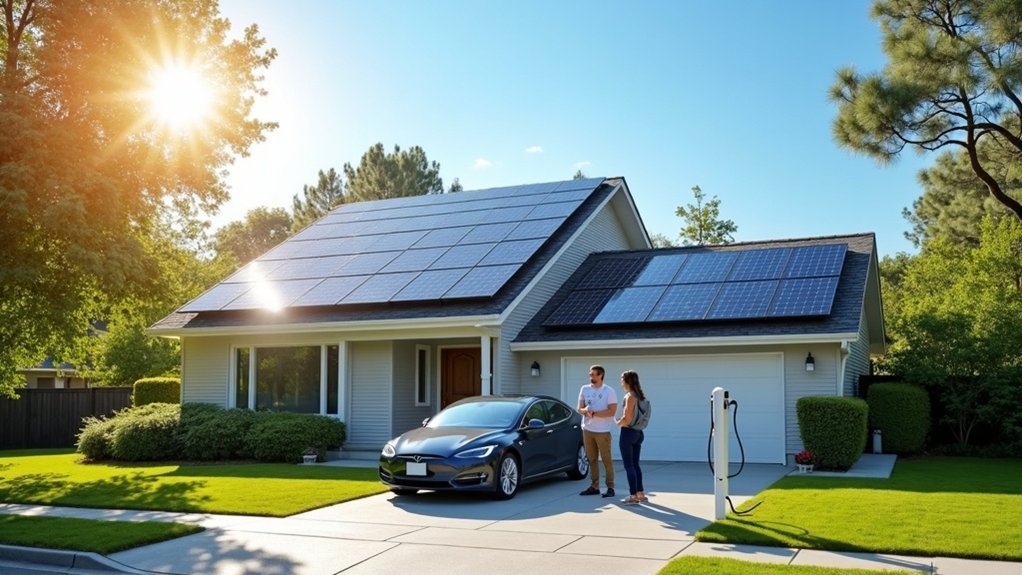
Buying a house with solar panels generally isn’t a problem and offers considerable financial savings, including reduced energy bills and potential earnings through government incentives. However, if the system is leased, you must carefully review lease terms to avoid penalties or complications during sale negotiations. Ownership clarity affects mortgage approval, and maintenance responsibilities typically transfer with the home. Regional factors also influence panel efficiency. Understanding these elements upfront helps you make an informed decision and uncover additional benefits and challenges.
Financial Advantages and Potential Costs of Solar Panels
While the initial installation of solar panels can require a considerable upfront investment, buying a house with existing solar panels offers considerable financial advantages that often outweigh these costs over time. You can save approximately £4,335 over 25 years by reducing your energy expenses through free solar electricity. Typically, solar panels cover about half of a home’s electricity needs, greatly cutting reliance on the National Grid. The average break-even period is around 15.66 years, so you’ll likely start saving almost immediately after installation. Additionally, homes with solar systems may see increased resale value, making them a prudent investment. You might also earn up to £200 annually through the Smart Export Guarantee (SEG), adding a steady income stream to your financial benefits. Participation in the SEG requires your solar installation to have Microgeneration Certification Scheme accreditation, ensuring eligibility for export payments.
Environmental Impact and Sustainability Benefits
Because solar panels reduce reliance on fossil fuels, they greatly lower your home’s carbon emissions, saving approximately 1 tonne of CO2 annually and cutting your overall carbon footprint by around 15%. By harnessing solar energy, you contribute to sustainable living through the use of the cheapest and cleanest energy source available. This reduction in emissions directly supports environmental protection efforts and helps mitigate climate change. Additionally, government grants increase accessibility, encouraging more homeowners like you to adopt renewable energy solutions. The growing public interest in properties with solar panels, with 65% of individuals favoring such homes, reflects a shift towards environmentally responsible housing. Consequently, owning a solar-equipped house not only delivers long-term financial savings but also greatly advances sustainability goals. Installing a solar battery for energy storage further maximizes your use of solar energy by storing surplus electricity for use during non-sunny periods.
Issues Related to Leased Solar Panel Systems
Although leased solar panel systems offer an accessible way to adopt renewable energy, they introduce several complexities when purchasing a home. You need to carefully review the lease terms with a solicitor, as removing panels prematurely can result in penalties. Additionally, properties with leased systems might involve extra fees during sale negotiations, especially if an agent oversees the lease. Mortgage lenders may also hesitate to approve loans if a third party owns part of the solar system, so verifying ownership is critical. When you buy such a home, the responsibility for installation and maintenance typically transfers to you, which could affect your costs and obligations. Participation in programs like Solar Together helps avoid these issues by promoting fully owned solar systems, simplifying the purchase process.
Key Questions to Ask Before Purchasing a Solar-Equipped Home
What should you consider before committing to a home equipped with solar panels? First, verify if the system includes a solar battery, as it can boost your electricity savings by storing excess energy. Next, ascertain the panels are securely installed and properly connected; faulty installation diminishes performance and future benefits. Additionally, ask for detailed installation records, including the date and the company responsible, which helps assess the system’s reliability and quality. Don’t overlook the warranty status—solar panels typically have a 25-year warranty, so knowing its expiration clarifies upcoming maintenance duties. Finally, understand the legal requirements for solar panel disposal under EU regulations, especially if removal becomes necessary. It is also wise to check if the system was installed by an MCS-certified installer to ensure quality and compliance with current standards.
Regional Variations and Expert Perspectives on Solar Panel Efficiency
Understanding the efficiency of solar panels requires examining how regional factors impact their performance, as climate and geographic location greatly influence energy generation. For example, the Isle of Wight produces 16% more electricity than the UK average due to favorable weather conditions, while Cornwall leads in renewable energy generation, making it an ideal area for solar-equipped homes. In Northern Ireland, households can save around £584 annually by using solar panels, reflecting region-specific financial benefits. Expert local guides offer detailed information on installation costs, potential savings, and available grants, helping you make informed decisions. Since environmental factors greatly affect solar efficiency, it’s essential to assess regional solar potential carefully when buying a home with solar panels, ensuring you maximize both energy output and economic advantages. Additionally, you can receive up to 4 free quotes from approved local installers to compare options and find the best fit for your needs with solar panel installation.